


Horizon Air flight attendants have voted overwhelmingly to authorize a strike, increasing pressure on Alaska Air Group as contract talks continue under federal mediation. The Association of Flight Attendants-CWA said 99.8% of the regional airline’s flight attendants backed strike authorization, giving union leaders a powerful mandate as they push for higher pay, better benefits, and improved work rules.
However, the vote does not mean Horizon flight attendants are walking off the job immediately. Airline labor negotiations are governed by the Railway Labor Act, which requires a lengthy process before a strike can legally take place. For now, the vote is best understood as a major escalation in bargaining, not an imminent disruption to Alaska Airlines’ regional network.
Horizon Flight Attendants Turn Up The Pressure
The strike authorization vote covers around 650 Horizon Air flight attendants represented by AFA-CWA. The union said the vote followed delayed bargaining and what it described as weak economic proposals from Horizon management. Horizon flight attendants filed for federal mediation in January 2025, meaning the dispute has already been moving through the formal airline labor process for more than a year.
Lisa Davis Warren, president of the Horizon chapter of AFA-CWA, said the vote was intended to send a clear message to both Horizon and Alaska Air Group leadership. Speaking to Alaska’s News Source, she emphasized that “the goal is not necessarily to go on strike,” but to make management understand that flight attendants want a contract that reflects the work they perform. She said:
“It’s time to get this contract done and it’s time to pay our flight attendants a livable wage, make meaningful improvements in their benefits and work rules improvements across the board in the contract.”
The union’s demands center on what have become major themes in flight attendant negotiations across the industry. AFA says Horizon flight attendants are seeking living-wage pay increases, better benefits, work-rule improvements, and increased pay for time spent at work, including boarding. Warren said a first-year Horizon flight attendant currently makes under $20,000 for a full-time position, and some duties performed before and after flights are currently unpaid.
“It’s deplorable that we have these types of wages being offered to people who have families and need to support themselves. This is a career. People who fly have a passion for what they do. We can’t have flight attendants not paid for some duties performed before and after flights, including preflight safety checks and boarding.”
Horizon Air is more than just another regional partner. The airline has deep roots in the Pacific Northwest, having been founded in Seattle in 1981 and built around connecting smaller communities in the region with larger airline networks. Alaska Air Group acquired Horizon in 1986, and the airline later became a central part of Alaska’s regional operation.
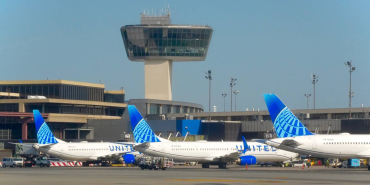
Although Horizon once operated with its own passenger-facing brand, it now flies under Alaska’s regional structure, operating aircraft that are scheduled, marketed, and sold by Alaska Airlines, and carry the parent’s brand. That makes the labor dispute strategically important: Horizon supports the smaller-market connectivity that helps Alaska build scale at Seattle-Tacoma International Airport (SEA), Portland International Airport (PDX), and across the western United States.
76 seats: 12 First, 16 Premium, 48 Main Cabin
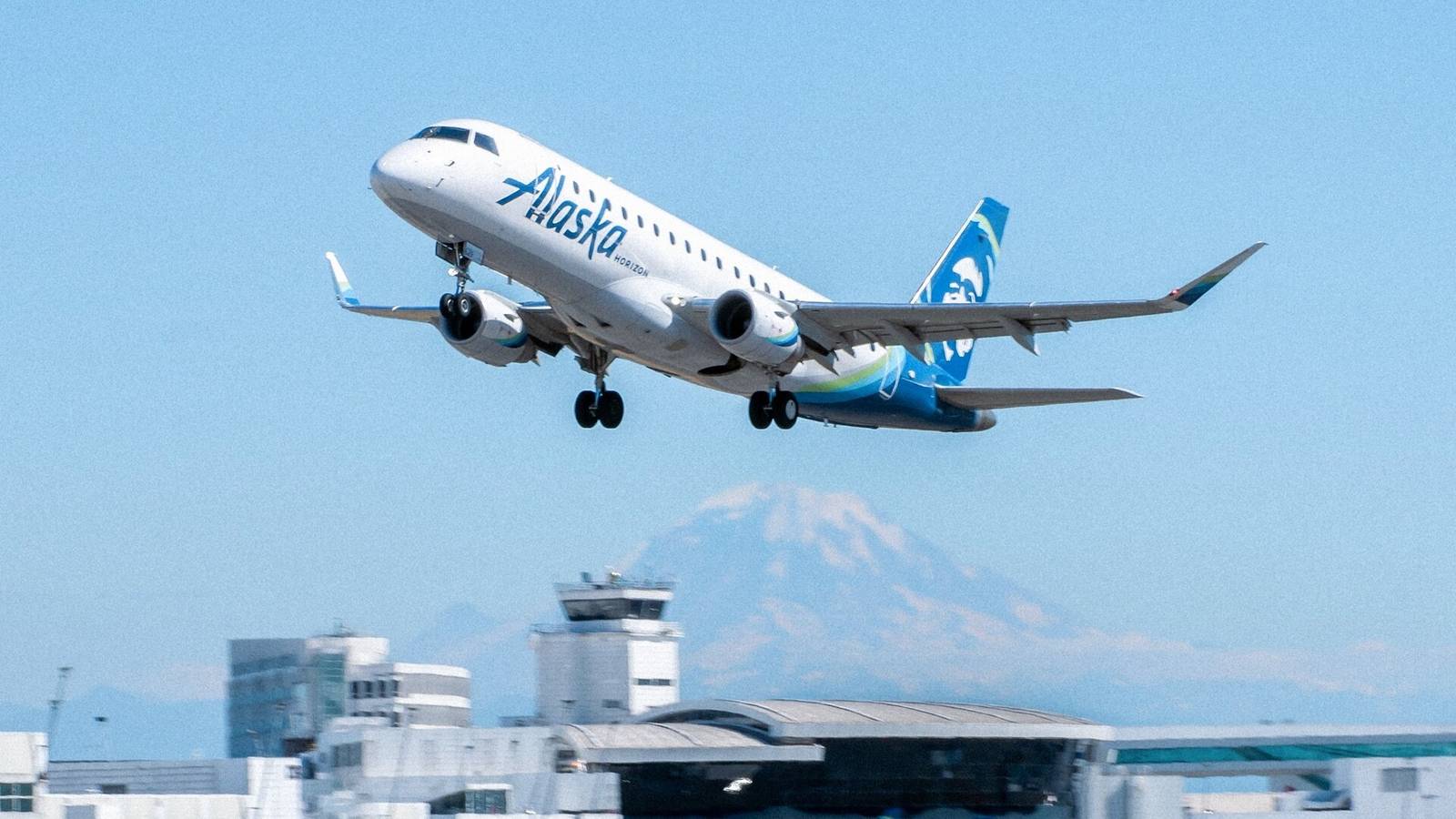
Horizon’s current fleet is entirely built around the Embraer E175, a 76-seat regional jet with a three-class cabin. Alaska’s fleet page lists 47 E175s operated by Horizon, alongside 42 Alaska-branded E175s operated by SkyWest Airlines. Together, those aircraft give Alaska a large regional jet platform that can serve thinner routes while still offering first class, premium economy-style seating, and main cabin service.
That regional feed is especially important as Alaska Air Group becomes a more complex business following its acquisition of Hawaiian Airlines. While the long-haul side of the group is attracting all the attention, the regional network remains central to Alaska’s ability to connect smaller communities across the region to its larger hubs, and feed its international aspirations.
The National Mediation Board will now schedule meetings between the Union representing the flight attendants and management at Alaska Airlines.
Alaska Air Group has sought to reassure passengers that the vote will not affect travel in the near term. In a statement reported by KGW, the company described a strike-authorization ballot as a “common step in the negotiation process” and said the outcome does not mean a strike will happen soon, if at all. The company also said airline strikes are rare and require a lengthy series of steps.
That is because the Railway Labor Act creates a high bar for airline strikes. The National Mediation Board must first determine that further mediation will not produce an agreement. It can then offer arbitration, and if either side rejects that offer, the parties may be released into a 30-day cooling-off period. Only after that process can self-help become available, unless a Presidential Emergency Board or other intervention delays action further.
If the process eventually reaches that point, AFA says it can use its trademarked CHAOS strategy, short for Create Havoc Around Our System. Unlike a traditional system-wide strike, CHAOS is targeted. Warren said that a strike, if it happens, could affect “specific flights and specific destinations,” rather than being a full-network walkout. That makes the strike vote a bargaining tool as much as a threat: Horizon flight attendants are trying to show Alaska Air Group that a small regional workforce can still create significant operational pressure if contract talks do not move forward in a positive direction.
Orijinal Haberi Görüntüle