
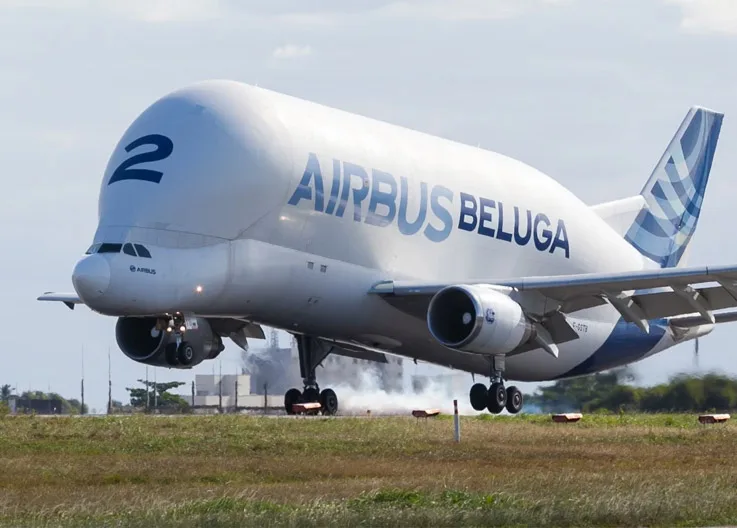


The aviation giant Airbus has experienced the harsh reality of how challenging it is to translate its exceptional success in aircraft manufacturing into the air cargo sector. The company has decided to terminate its large cargo carrier, Beluga, after just 14 months of operations. But what lies behind this sudden decision? Airbus officials emphasise that the closure is not due to changes in the air cargo market. A company spokesperson told AFP: “The decision to terminate Beluga’s operations is not market-driven but stems from significant operational challenges.”
High Expectations, Tough Operations
Beluga was introduced with the launch of Airbus’s new generation of large cargo transport aircraft, based on its A330 model. These aircraft were developed as successors to the original A300-inspired models. However, the first-generation Beluga models were incapable of carrying parts for Airbus’s newer A350 aircraft.
Four Beluga planes were specifically designed to transport satellites, engines, and other large, sensitive items. Airbus launched these aircraft at the end of 2022 with high expectations. Yet, the complexities and challenges of operations made it unsustainable for the company to continue the project.
The End of an Ambitious Experiment
The closure of Beluga reflects the difficulties Airbus faced in entering the air cargo sector. Industry experts suggest this decision serves as a valuable lesson for Airbus, potentially prompting more cautious strategic planning in the future.
© AeroHaber.com
Aviation News and Defense Industry news published on our website cannot be used without proper attribution.
Follow Us on Social Media!
For more news and updates, connect with us on:
- Instagram: [AeroHaber_ AeroNews]
- LinkedIn: [AeroHaber | AeroNews]
- X (Twitter): [Aero_Haber]
Stay tuned for more insights into airline policies and passengers’ rights!