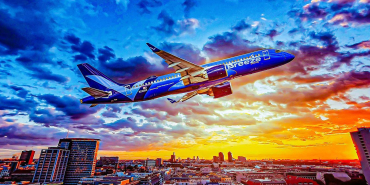

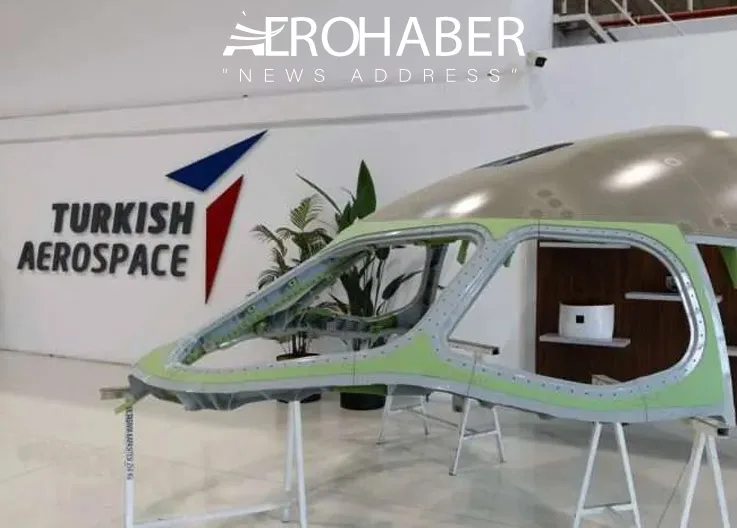


Turkish Aerospace Industries (TUSAŞ) has achieved another significant milestone in its production for Airbus’s A220 single-aisle passenger aircraft programme. The company successfully delivered the 250th canopy (cockpit upper structure) for the programme at its Ankara Kahramankazan facilities.
75 Percent Domestic Subcontracting Utilisation
According to Airbus’s design data, approximately 75 percent of the detailed parts used in the canopies, manufactured under the “Build to Print” model, are supplied by domestic subcontractors. This proportion is considered a strategic milestone in demonstrating the level reached by Türkiye’s aerospace manufacturing ecosystem.

Turkish Engineering Beyond Global Standards
The canopy—one of the critical components with high surface precision and the first to encounter the aircraft’s aerodynamic flow—is produced by TUSAŞ with quality that exceeds global standards. Meeting nearly 75 percent of the global market for A220 canopy production alone, the company has positioned itself among the leading international manufacturers in this field.
Rapid Growth in Production
The A220 programme at TUSAŞ began in 2020 with only two deliveries. Production capacity has increased each year, reaching:
- 74 deliveries in 2024,
- 81 deliveries as of November 2025.
With this, total deliveries have reached 250, and the year-end target has been announced as 96 units.

100 Percent Success in Quality and On-Time Delivery from Airbus
Airbus measures supplier performance with the OQD (On Time Quality Deliveries) and OTS (On Time Shipment) criteria. While the global average for these indicators is around 85 percent, TUSAŞ achieved 100 percent success. Airbus officials have officially commended the company’s performance across various platforms.
Collaboration to Continue Until 2050
The TUSAŞ–Airbus cooperation within the A220 programme is positioned as a long-term strategic partnership planned to continue throughout the aircraft’s operational life. According to current projections, the collaboration between the two companies is expected to continue at least until 2050.