


Following the attack that disrupted flights in Poland, Ryanair called on the EU and NATO for a strong response.
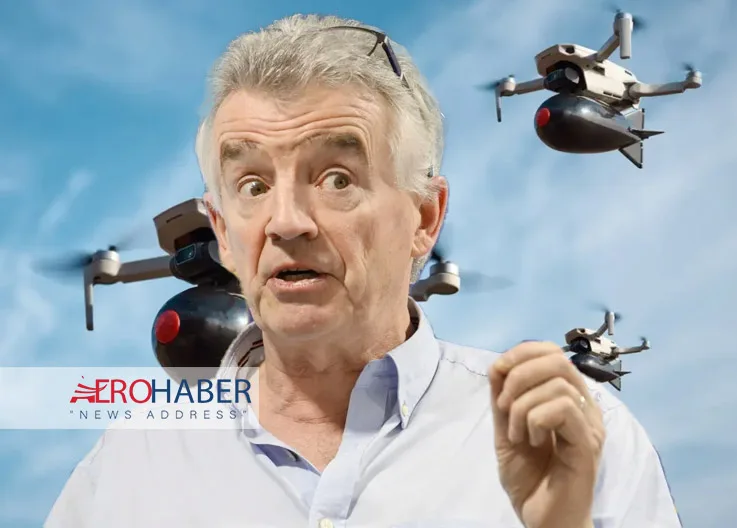
Ryanair Group CEO Michael O’Leary stated that Russian drones interfering with European airspace could continue for many years, affecting airline operations across the continent. O’Leary shared this assessment at the company’s general assembly, held the day after the drone attack on Polish airspace that caused flight disruptions.
Describing the incident as a “wake-up call from Russia to the EU and NATO,” O’Leary urged the European Union and the United States to take “firm measures and impose new sanctions” against Russia. He stressed that while the event was more of a “disruption” than a direct security threat, delays and cancellations triggered a domino effect due to the integrated nature of Europe’s air traffic network.
Reaction from Spain: “Consumer Rights Cannot Be Overlooked”
The remarks also resonated in Spain. Minister of Social Rights, Consumer Affairs and the 2030 Agenda Pablo Bustinduy criticised Ryanair’s CEO for meeting with European Commissioner for Transport and Tourism Apostolos Tzitzikostas.
Calling the Brussels meeting “surprising,” Bustinduy said it would be “unacceptable” for the European Commission to protect the interests of multinational companies while ignoring the rights of European consumers. The Spanish government noted that they have yet to receive a response to their demands for sanctions on low-cost airlines.
Dual Pressure on European Aviation
Recent developments reveal that Europe’s aviation sector is under pressure on two fronts:
-
External security risk: The uncertainty caused by Russian drone attacks
-
Internal political tension: Debates within the EU over airline regulations and consumer rights
While Ryanair reiterates its call for coordinated measures to safeguard European airspace, the Spanish government insists that Brussels prioritise consumer rights and airline regulations. The European Commission has not yet disclosed details of its meeting with Ryanair.