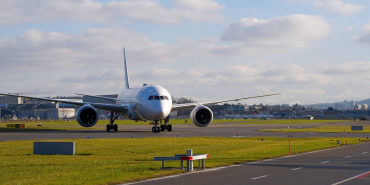

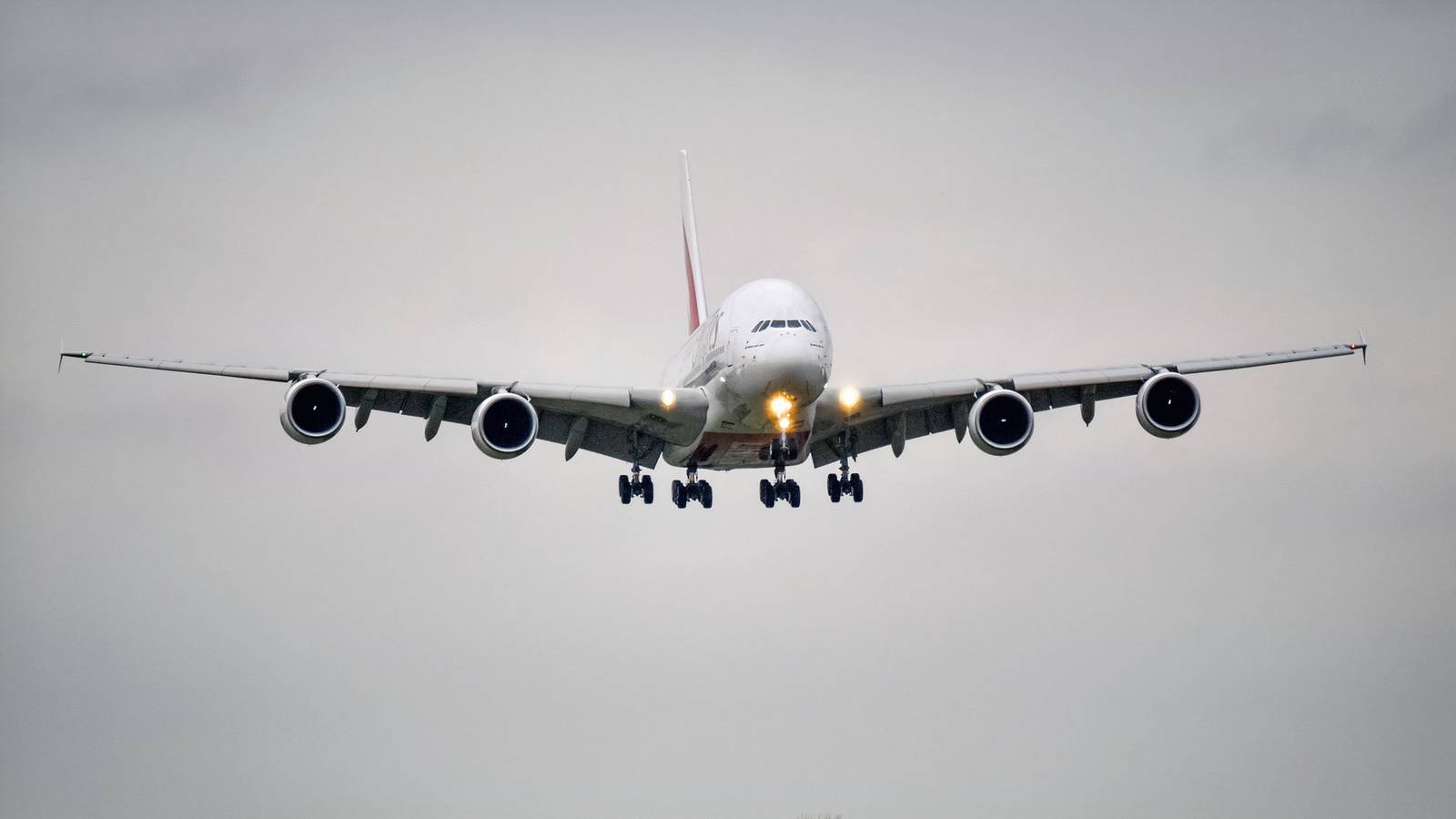


The Airbus A380 didn’t revolutionize air travel the way that the Boeing 747 did, and Airbus didn’t make a profit from the program. Some airlines had difficulty filling their A380s, and some fully retired their examples during or after the COVID-19 pandemic. But for the carriers who have made the A380 work, it’s enabled them to use the planes in a way that no other airliner can match. Of course, there’s the obvious in that it holds nearly double as many passengers as a Boeing 787, but the A380 has other notable capabilities as well.
The A380 is currently used by ten airlines worldwide, and the program received 251 orders. Singapore Airlines was the type’s first operator in 2007, and All Nippon Airways was the last new customer for the A380 in 2019, while Emirates is by far the world’s largest operator of the double-decker with 116 in service today. While some airlines intend to retire their A380s by the end of the decade or in the 2030s, Emirates aims to keep its superjumbos flying until 2041.
The A380’s Usefulness In Slot-Constrained Airfields
It’s the top aircraft if you want to expand but lack slots
There are multiple factors behind the A380’s failure to achieve meaningful sales, with one common argument being that it’s often just as cheap to run two Boeing 787s instead of one A380, which is often the better choice as business travelers prefer having multiple departure choices. This strengthens yields, whereas an A380 with a massive economy cabin can dilute yields in some instances. But not all airlines have this choice, because some of the world’s highest-demand airports are slot-restricted.
During the 2026 summer season, British Airways will be deploying the A380 to Boston, Dallas/Fort Worth, Dubai, Johannesburg, Los Angeles, Miami, Singapore, and San Francisco. Most of these aren’t slot-restricted, but London-Heathrow is, and British Airways already operates multiple daily frequencies to many of these markets. It could have skipped out on the A380, but then it’d be leaving money on the table. Adding a frequency during off-peak hours would create a loss-maker, and the airline is short on prime-time slots.
Using the Airbus A380 allows British Airways to optimize its network and continue to grow profitably. In addition to British Airways, Emirates has also benefited hugely from the A380 and has grown dramatically as it uses a massive fleet of A380s throughout its network. It has functioned well as a network optimization tool, and British Airways has even considered acquiring additional used A380s because the type has worked well for it, although the carrier later decided against it due to high refurbishment costs.
No plane can carry as much payload as the A380 on long flights
The Airbus A380 could be specced with a maximum takeoff weight (MTOW) of 575 tons and had a range of nearly 8,000 nautical miles (15,000 km). In a sense, the plane was overbuilt for some of the missions that it’s actually used for today. But for airlines operating large long-haul and ultra-long-haul flights, the A380 offers unbeatable revenue potential while being able to operate practically any route in an airline’s network. Of course, the A380 has eye-watering operating costs, but revenue is just as important as costs.
The Boeing 787 is much cheaper to operate, but on a route like Dubai to Auckland, the 787 may end up departing with blocked seats and no cargo. From Dubai to Auckland, the A380 will also depart with blocked seats and no cargo, but it’ll still carry 300 to 400 passengers. When the demand exists, the A380 makes more money in some instances, and this is particularly useful when operating out of constrained airports like London-Heathrow, Dubai, or Sydney, where it’s not easy to simply add another frequency with a smaller plane.
Qantas operates a large ultra-long-haul network using the A380 as well as the 787-9. The A380 serves destinations like Los Angeles, Singapore, London-Heathrow, and Dallas/Fort Worth. For Qantas, these routes are long, but the revenue that the carrier earns from using its 485-seat A380s is far greater than the cost to run the quadjets. The 787-9 fleet is deployed on select routes out of Qantas’s hubs in Eastern Australia, but is also notably used to serve London-Heathrow, Paris, and Rome from Perth. Demand is weaker, and the 787-9’s low operating cost is therefore far more important.
Two decks and a wide airframe enable the A380 to transport more people than any other aircraft in a style only the “King of the Skies” can accomplish.
Premium seats are very lucrative for airlines because they have far better margins than economy seats, but they also take up more space. Installing a large number of premium seats can dramatically cut an aircraft’s overall capacity, leading to higher per-seat costs. But on the A380, carriers have flexibility with installing large premium cabins without sacrificing too much economy capacity. With demand for premium seats on the rise, this capability is as lucrative as ever.
The A380’s cabin can accommodate ten seats per row in economy on its lower deck, but only eight seats per row on the upper deck. Business class seats, however, are usually installed four-abreast on both decks. This means that operators have a little bit more flexibility in optimizing their layouts to offer large business class cabins while still offering more economy capacity than any other aircraft in their fleet.
Emirates installs 76 business class seats and 14 first class seats on the plane’s upper deck, while Singapore Airlines installs six Singapore Suites and 78 business class seats in the same space. British Airways already installs more premium seats on its A380s than any other operator, installing 14 First suites and 97 Club World seats, but will soon refurbish these planes. Once reconfigured, British Airways’ A380s will feature 110 Club Suites taking up the entirety of the plane’s upper deck, in addition to the aircraft’s first class cabin on the lower deck.
The plane known for elaborate first class seats
Because the Airbus A380 has more floor space than any other airliner in history, airlines have room to experiment with larger seats. The plane’s upper deck is actually fairly narrow, most similar to an Airbus A330, and so many airlines are still flying the double decker with older business class seats. However, the added space has enabled airlines to offer larger first class cabins, or larger first class seats. In this regard, it’s Etihad Airways and Singapore Airlines that impress the most.
The Etihad First Apartments are configured in a two-abreast, single aisle configuration. Such a design had never been attempted before on a passenger airliner, and it was easily the most spacious first class cabin in the world. It wouldn’t be feasible on any other jet airliner because the suites would simply be too large, but the A380 is so big that these seats proportionally take up less space.
Meanwhile, Singapore Airlines introduced its own two-abreast single aisle first class on the A380 in 2017, dubbed Singapore Suites. Once again, these seats are only feasible on the A380, and the Singapore Suites are even larger than the Etihad First Apartments. Etihad also offers first class on its Boeing 777-300ERs and 787-9s, but these are a typical four-abreast first class product. Similarly, Singapore Airlines is planning a new first class for the Airbus A350-900ULR and Boeing 777-9, but this, too, will be a four-abreast design if the carrier’s patent filings are to be believed.
A major upgrade is coming to British Airways’ A380 fleet, but what surprises does the new first class cabin hold?
Onboard social spaces used to be an expectation even before the advent of the widebody, with airlines regularly installing lounges on Boeing 707s and Douglas DC-8s. Economy passengers had their own spaces as well. But post-deregulation, airlines began removing these spaces to install seats in their place, and onboard social spaces became a rarity. But with the Airbus A380, the industry saw the return of these spaces.
Because of the size of the A380, adding an onboard lounge doesn’t have a dramatic impact on the aircraft’s overall capacity. Emirates, Etihad Airways, and Qatar Airways all installed lounges in the passenger cabin on their planes, which helped elevate their brand through a halo effect without hurting the plane’s operating economics. In addition, the A380 has a large space ahead of the passenger cabin on the upper deck that cannot be used for seating, and it’s used by Qantas, as well as Korean Air and Asiana, as a lounge.
Asiana Airlines, Emirates, Etihad Airways, Korean Air, Qantas, Qatar Airways
Other airlines installed upsized lavatories in this space, while Emirates took it a step further and installed two massive shower suites. In addition to the space, the A380 can also more easily carry the extra water needed for the showers due to its overall weight capacity, whereas a smaller aircraft would take a major hit in payload. Etihad Airways, meanwhile, installs two lavatories in this space on one side of the aircraft (one of which has a shower), while the other side is dedicated to the bedroom part of the Residence.
Orijinal Haberi Görüntüle