
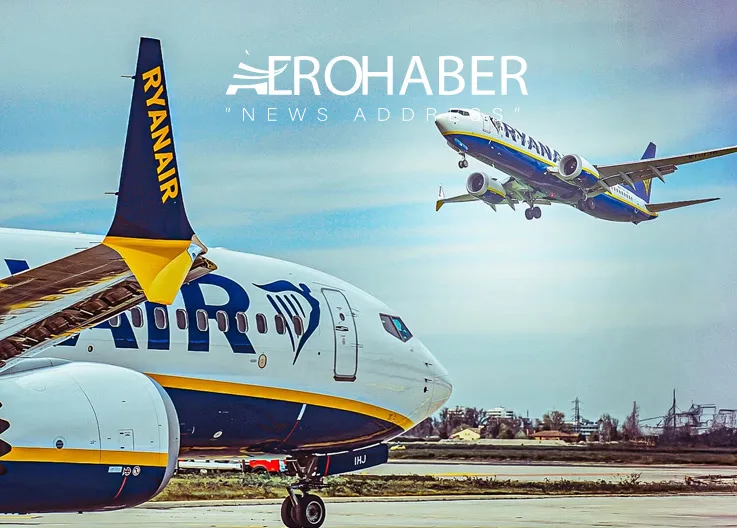


Italy’s Competition Authority (AGCM) has decided to impose an administrative fine of €255 million on low-cost airline Ryanair for abusing its dominant position in the country’s air transport market.
In a statement, the authority said that Ryanair controls around 40% of flights to and from Italy and used this power to make ticket sales by travel agencies more difficult.
The statement noted that the airline pursued a “complex and systematic strategy” aimed at preventing online and traditional travel agencies from purchasing tickets via ryanair.com. In this context, it was reported that technical barriers and additional verification steps were introduced, particularly for reservations made through third parties.
It was stated that from April 2023 onwards, facial recognition and additional identity verification procedures were made mandatory for certain bookings made via travel agencies, while direct Ryanair customers were largely exempt from these checks. Authorities emphasised that these practices made sales through agencies slower, more expensive and less secure, thereby steering consumers towards direct sales channels.
The Competition Authority also found that Ryanair at times completely blocked travel agencies’ access to its website, disabled certain payment methods, and deleted a large number of agency user accounts.
The decision stated that since Ryanair flights are an indispensable component of travel packages departing from and arriving in Italy, these practices effectively brought the activities of travel agencies to a standstill.
As part of the investigation, it was also noted that Ryanair forced travel agencies to sign restrictive partnership agreements. These agreements were reported to limit agencies’ ability to bundle Ryanair flights with other airlines, accommodation, insurance and tourism services.
The authority stated that Ryanair increased this pressure by conducting “aggressive communication campaigns” against platforms that refused to sign such agreements, describing these agencies as “pirate online travel agencies”.
In its statement, the Italian Competition Authority underlined that holding a dominant position is not illegal in itself, but that using this power to exclude competitors and distort market structure is contrary to competition law. The decision concluded that Ryanair used its power in the air transport market to weaken competition in the travel and tourism services market, thereby reducing consumer choice.