
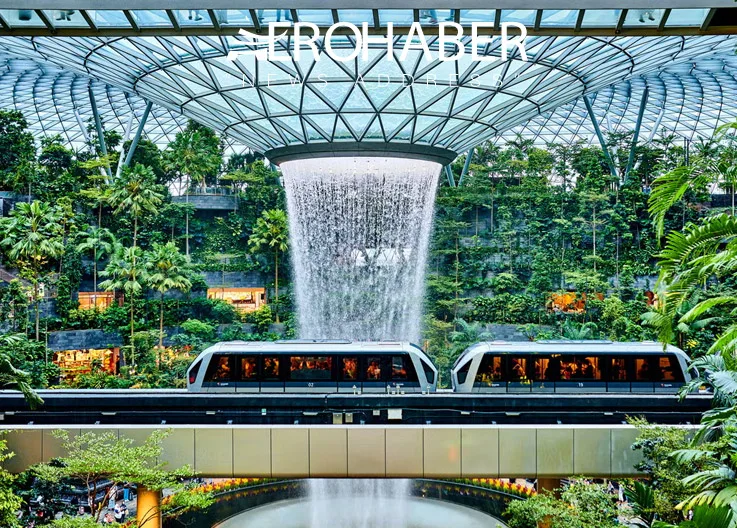


The world’s leading airports are transforming the time passengers spend into premium experiences, turning them into new attraction centres for luxury retail. The new model—where designer brands, exclusive collections and personalised services converge—elevates airports from being just transit points to becoming destinations in their own right.
Our New Focus in Luxury Retail: “The Airport Experience”
Globally, luxury brands now position duty-free areas not merely as shopping points but as first-class retail hubs. The increasing number of luxury stores at airports, boutique environments enhanced with digital experiences and the privilege of accessing exclusive collections are reshaping travel culture.
James Mullaney, President of Executive Retail Shops, explains the rise of airport shopping as follows:
“Luxury shopping stands at the intersection of time efficiency and enjoyment. The time passengers spend at the airport has become the most defining moment of the travel experience.”
Private Jet and Premium Passenger Segments Are Redefining Luxury
As high-end travellers view travel as a lifestyle, demand is growing for personalised service, access to exclusive collections and the convenience of purchasing luxury while on the move. This makes luxury retail a critical strategic component for airports.
Major hubs in Europe, the Middle East and Asia are leading this transformation. Incheon International Airport in South Korea stands out not only for its appeal to high-income travellers but also for its diverse luxury product demand among a broader audience.
Sol Jung, Deputy Manager of the Incheon Duty Free Business Team, summarises this shift:
“Luxury privileges are the key element that transforms an airport from an ordinary transit point into a destination in itself.”
Experiential Retail: The New Game Plan at Airports
The ASQ Global Traveller Survey Report published by Airports Council International (ACI) reveals that consumers are no longer buying only products—but experiences. For this reason, airports are shifting towards experiential retail models that blur the line between “shopping + entertainment”.
Mauro Anastasi from Bain & Company describes the shift in airport retail as follows:
“You need to ensure that the passenger is not waiting at the gate but spending time in a place they enjoy. You must create an experience that keeps them there longer.”
In this context, brands are transforming “airport waiting time” into a shopping experience through personalised services, interactive exhibitions, digital touch experiences and premium atmospheres.
Physical Retail Goes Digital: AR, Smart Mirrors and Multi-Sensory Stores
“Phygital” (physical-digital) integration is accelerating in luxury stores.
The ACI report highlights examples such as Gucci’s augmented reality (AR) product try-ons and Ralph Lauren’s smart mirrors offering complementary product recommendations.
This approach not only accelerates high-budget shopping at airports but also enables brands to offer their customers far more personalised interactions.
Young Travellers Redefine Luxury: Not One Brand, but Personal Identity
According to Bain & Company, global duty-free penetration is only 10–20%. Most passengers do not shop. Younger generations, in particular, interpret luxury differently:
- They do not stick to a single iconic brand,
- They blend luxury with niche labels,
- They favour discovery- and experience-based boutiques,
- They gravitate more towards pop-up stores.
Anastasi explains this shift as follows:
“There is no single iconic brand that defines Generation Z. Airports may need to make room for dozens of small and innovative brands instead of one or two big names.”
However, this requires a strategic balance for airport management, as such brands generally yield lower profitability and rental income compared to traditional luxury brands.
Airports Are Now Luxury Ecosystems
In this era where luxury is being redefined, airports are no longer just places where people shop;
they are evolving into next-generation lifestyle spaces where discovery, experience and exclusive brand interactions converge.
For retailers and airport operators, competition is no longer just about brand variety—it is about creating an experience that appeals to passengers’ emotions, is immersive and saves them time.